
Elvish Yadav, the 27-year-old YouTuber and reality TV star from Gurgaon, Haryana, is at the center of a brewing industry storm as the Federation of Western India Cine Employees (FWICE) demands his immediate removal from Laughter Chefs Season 2, even as leaked footage suggests he and co-contestant Karan Kundrra have already been crowned winners. The demand, formalized in a letter dated November 20, 2025, by BN Tiwari, President of FWICE, marks a rare public intervention by a major industry union against a reality show contestant — not for misconduct on set, but for a pattern of behavior that FWICE says undermines the dignity of Indian television.
The FWICE Intervention: Why This Matters
FWICE, representing over 150,000 workers across film and TV production in Western India, operates from its headquarters at the Film Employees Federation Building in Mumbai. For decades, the organization has acted as a moral compass for the industry, pushing back against exploitative practices and toxic public personas. Tiwari, who’s held the presidency since 2021 and spent 25 years as a production manager, didn’t act lightly. His letter cites Yadav’s history of public outbursts — including a viral airport meltdown in March 2024 and a physical altercation with content creator Sudeep Sahir in January 2025 — as incompatible with the values the channel claims to uphold.
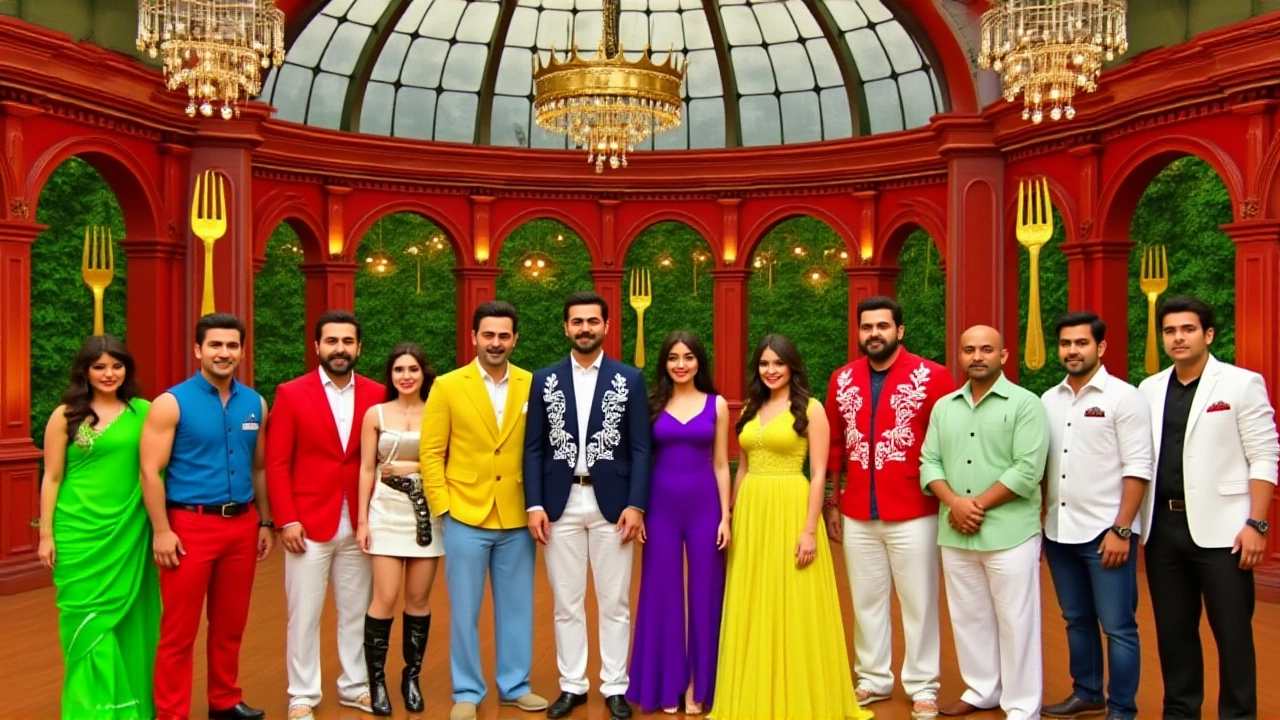
"We don’t police personal lives," Tiwari told reporters on November 22, 2025. "But when a show markets itself as family entertainment, and the lead contestant has repeatedly turned controversy into content, we have to ask: what message are we sending to millions of children watching?" The timing is critical: the finale, filmed at Film City in Mumbai, is scheduled to air November 23–24, 2025, with trophy photos already circulating online.
The Show’s Shifting Dynamics
Yadav entered Laughter Chefs Season 2 in September 2025 paired with Tajik singer Abdu Rozik. But by early October, production swapped Rozik for Karan Kundrra, the 39-year-old Punjabi actor known for his roles in soap operas and his calm demeanor. The change was reportedly made to balance the show’s tone — and perhaps to mitigate fallout from Yadav’s growing notoriety.
Despite the swap, the duo reportedly clicked on-screen. In an exclusive interview with Times of India TV on November 21, 2025, Yadav praised Kundrra, Vicky Jain, Ankita Lokhande, and Rubina Dilaik, saying, "I’ve an amazing bond with everyone on the show. I ask them to bring food for me from home, and they do." He added, "Fans love my bond with Rubina. I read about it on social media and feel good about it."
But the warmth behind the scenes hasn’t erased the friction outside. On November 7, 2025, Yadav posted a fiery social media rant after a flight delay, publicly blaming the show’s management — a post that went viral and was cited by FWICE as evidence of "unprofessional conduct." His comments about his parents — "They’re done with me... they ask me to do whatever I want as long as I’m not sitting idle" — struck a chord with many viewers who see his behavior as a reflection of a deeper cultural shift in how fame is pursued.
Yadav’s Defense: "I Haven’t Been Convicted Yet"
Yadav insists he’s being judged on perception, not proof. In a November 2025 statement quoted by Indian Express, he said: "People just assume I am rude or evil. I have not been convicted yet." He referenced unresolved legal matters tied to his time on MTV Roadies, where he won Roadies Double Cross in early 2025, and suggested media narratives have outpaced due process.
His parents, he admitted, are heartbroken. "I don’t think any parent would like that for their children," he said in the Times interview. "My parents were extremely sad when this happened. But I think this is what life is about. Sometimes things are good, and sometimes they are not. But now I am trying to stay away from any controversy."
It’s a plea that rings hollow to critics. Since launching his YouTube channel in 2017, Yadav’s rise has been fueled by conflict — from staged arguments to public confrontations. His Bigg Boss OTT 2 win in 2023 was followed by a string of viral clips showing him yelling at crew members, refusing to follow instructions, and mocking critics. FWICE argues this isn’t just "edgy content" — it’s a blueprint for toxic behavior being normalized.
What Happens Next?
Colors TV has yet to issue a public statement. Sources close to production say the network is weighing legal risks, viewer backlash, and advertising fallout. Advertisers reportedly have already begun asking for reassurances. Meanwhile, FWICE has threatened to blacklist anyone involved in airing the finale if Yadav remains on-screen.
"This isn’t about canceling one person," said a senior FWICE executive who spoke anonymously. "It’s about drawing a line. If we let this slide, next time it’s someone who’s actually done something illegal — and we’ll have no moral ground to stand on."
As the finale airs this weekend, viewers will face a choice: do they tune in to celebrate a winner, or boycott a show that appears to reward controversy?
Background: The Rise of the Controversy-Driven Star
Yadav’s trajectory mirrors a broader trend in Indian digital entertainment. Since 2020, reality TV has increasingly prioritized drama over talent. Shows like Bigg Boss and Roadies have turned confrontational behavior into currency. But traditional industry bodies like FWICE are pushing back — arguing that the line between entertainment and exploitation has blurred dangerously.
Similar debates erupted in 2021 when Bigg Boss 14 contestant Pratik Sehajpal faced calls for removal after a racist comment went viral. He was not removed. In 2023, Indian Idol 13 contestant Shreya Ghoshal was criticized for a social media outburst — but the show stood by her. The difference this time? FWICE is acting preemptively, before the finale airs, and with the weight of 150,000 workers behind them.
Frequently Asked Questions
Why is FWICE targeting Elvish Yadav and not other controversial contestants?
FWICE isn’t singling out Yadav for past behavior alone — they’re reacting to the timing and scale. Unlike previous cases where controversy was isolated, Yadav’s pattern spans years, with multiple documented incidents across platforms. More importantly, this is the first time FWICE has intervened before a show airs, signaling a shift from reactive to preventive action. The union sees this as a test case for industry ethics.
Has Elvish Yadav been legally charged in any of these incidents?
No formal charges have been filed or convictions secured related to his public altercations. The 2024 Delhi airport incident and the January 2025 clash with Sudeep Sahir were reportedly settled informally or dropped due to lack of evidence. Yadav’s claim that he hasn’t been "convicted yet" is technically accurate — but FWICE argues that legal innocence doesn’t equate to social responsibility, especially in family-oriented programming.
What impact could this have on other reality shows?
If FWICE’s stance holds, it could force producers to vet contestants more rigorously, especially those with documented histories of public misconduct. Networks may start requiring behavioral disclosures or even ethics training before casting. Advertisers, already wary of association with controversy, could demand contractual clauses allowing them to pull out if a contestant becomes a liability — changing how reality TV is produced at its core.
Is Karan Kundrra also under scrutiny?
No. Kundrra, who joined the show in October 2025 as a replacement for Abdu Rozik, has maintained a low-profile, professional demeanor. FWICE’s letter specifically names Yadav, and industry insiders say Kundrra’s calm presence was deliberately chosen to stabilize the show. His involvement is seen as a corrective measure — not a continuation of the controversy.
What happens if Colors TV ignores FWICE’s demand?
FWICE has warned of possible labor actions, including boycotts by technicians, camera crews, and stagehands during future productions involving Colors TV. While no strike has been called yet, the threat carries weight — many crew members are union members who rely on these jobs. Additionally, FWICE could file a formal complaint with the Ministry of Information and Broadcasting, potentially triggering a review of the show’s content certification.
Why does this matter to regular viewers?
Because what’s on TV shapes culture. When a show rewards loud, confrontational behavior as entertainment, it normalizes it — especially for young viewers. FWICE argues that television isn’t just a product; it’s a public service. If networks prioritize ratings over responsibility, we all pay the price in how we see conflict, respect, and success — and that’s something no trophy can justify.